Blog · June 12, 2026 · Connor Cox
Soft Wash vs. Pressure Wash — Which Is Right for Your Pocono Home?
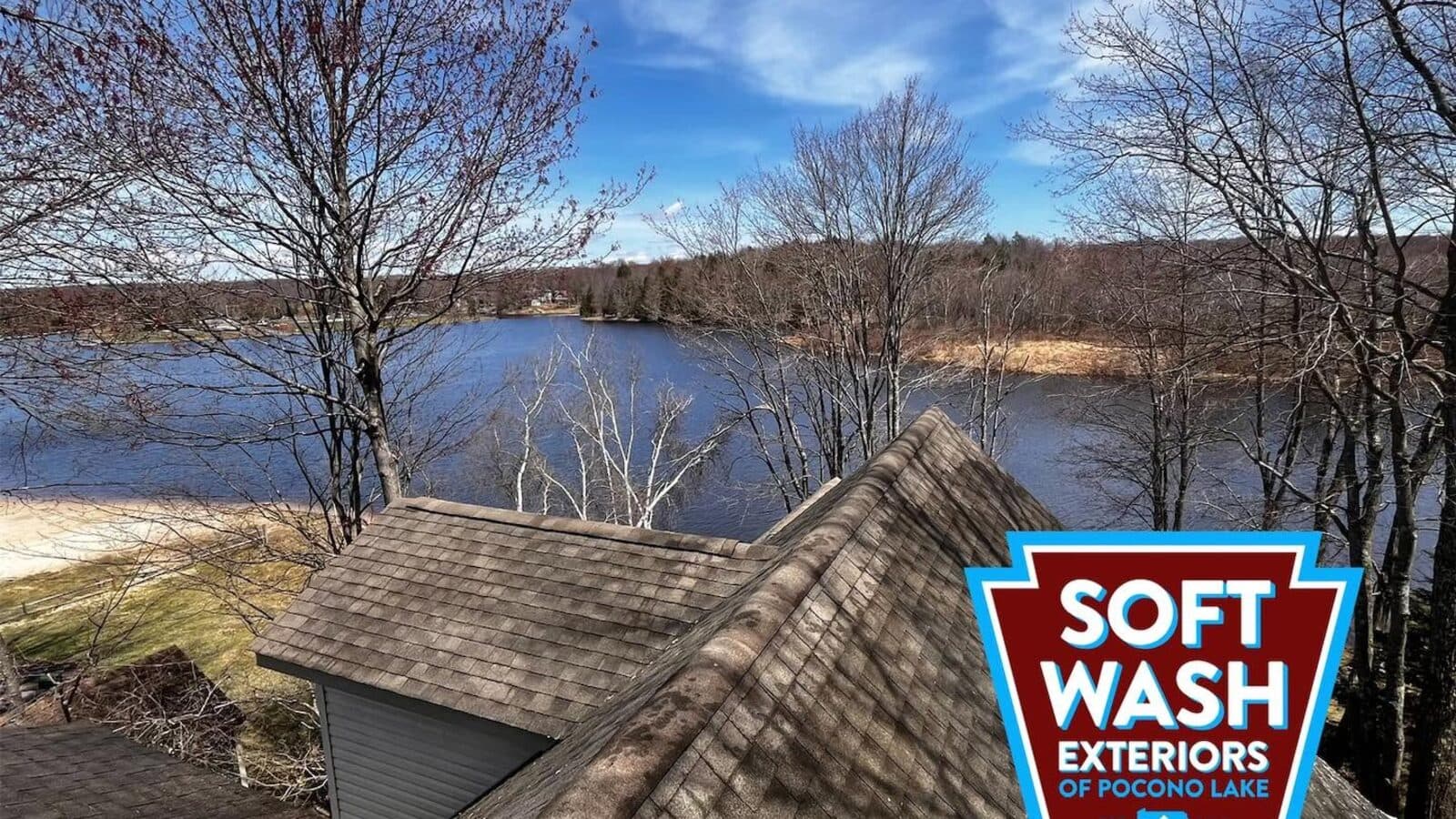
The difference matters more than most homeowners realize. Soft washing and pressure washing are not the same service with different names. They use different chemistry, different pressure, and different mechanisms to clean — and they produce different results on the surfaces common to Pocono lake-community homes.
Here is what both methods actually do, which surfaces each is appropriate for, and why the conditions in Monroe County make the choice more consequential than it would be for a drier-climate home.
What Each Method Is
Pressure Washing
Pressure washing uses high-volume water at high pressure — typically 1,500 to 4,000 PSI — to physically remove surface contamination. The water impact is the cleaning mechanism. Growth, dirt, and staining are dislodged by the force of the water hitting the surface.
Most pressure washing equipment operates in the 2,000–3,500 PSI range for residential work. Some contractors use "soft wash tips" on a pressure washer — reduced-pressure nozzles that lower the output PSI at the tip — but this is not the same as a purpose-built soft wash system. The underlying pump and chemical delivery of a pressure washer system differs from a dedicated soft wash setup.
Soft Washing
Soft washing uses a chemical solution — primarily sodium hypochlorite (bleach) diluted to the appropriate concentration for the surface type — applied at low pressure, typically 100 to 500 PSI. The chemistry is the cleaning mechanism, not the water pressure. The solution kills algae, mold, mildew, and other biological growth at the cellular level. The dead growth is then rinsed away at low pressure.
The critical distinction: soft washing kills the organisms. Pressure washing removes the organisms. If the organisms are still alive when they are removed, they re-establish from the spores and root structure left behind. A soft-washed surface stays clean longer because the biological community that produced the growth is dead.
What This Means for Your Pocono Property
Why Pocono Homes Are Different
Homes in the Pocono lake communities — Pocono Lake, Arrowhead Lake, Locust Lakes Village, Tobyhanna, Lake Harmony, and the surrounding corridor — deal with biological growth conditions that differ from homes in drier or more urban areas:
Lake humidity. Properties near Pocono Lake, Arrowhead Lake, Locust Lakes Village, and Lake Harmony sit in a consistent moisture environment. The lake air elevates ambient humidity, which keeps exterior surfaces damp longer after rain and overnight. This is ideal for algae and mildew establishment.
Heavy tree canopy. Most of the desirable lakefront and wooded lots have mature canopy that shades the north and east faces of the structure. Shaded surfaces dry slowly. A north-facing siding panel that faces mature oaks may stay damp for 12 to 16 hours after a rain event that a south-facing panel cleared in two.
Seasonal cycle of growth. Monroe County's wet springs and warm summers create the conditions for aggressive algae growth from April through September. The species that produce the black streaks on roofs (Gloeocapsa magma) and the green film on siding (various cyanobacteria and green algae) thrive in exactly these conditions.
The practical result: biological growth establishes faster on Pocono lake-community homes than on similar homes in drier climates, and it comes back faster after cleaning if the organisms are not killed.
Surface-by-Surface Guide
Vinyl Siding
Correct method: Soft washing
Vinyl siding is the most common exterior material in the lake corridor, and it is also the surface most commonly damaged by pressure washing done at full PSI. House soft washing is the correct method for the vinyl, stucco, and cedar exteriors common across this area.
At 2,500–3,500 PSI, water impact can:
- Separate vinyl siding seams and panels at the laps, allowing water intrusion behind the siding
- Drive water into the house wrap or building paper beneath the siding through the seam gaps
- Crack or dent older vinyl that has become brittle with UV exposure
- Force water into the j-channel around windows and doors
Most vinyl siding manufacturers specify in their maintenance literature that the product should be cleaned with low-pressure water and an appropriate cleaning solution. Pressure washing that voids a siding warranty is a real scenario.
Soft washing cleans vinyl completely and safely. The sodium hypochlorite solution breaks down the biofilm that causes algae and mildew growth on vinyl. The low-pressure rinse does not stress the seams. Results last two to three years in Pocono conditions versus six to twelve months for pressure-washed vinyl (where the organisms were removed but not killed).
Stucco
Correct method: Soft washing
Stucco is on a significant portion of the vacation homes and A-frames in the Pocono lake corridor. It is the surface where pressure washing does the most lasting damage.
Stucco's texture is porous — the same visual quality that gives it character is also what makes high-pressure water destructive. Pressure washing stucco can erode the finish coat texture, widen existing hairline cracks, and force water past the finish coat into the scratch coat and substrate. Water that gets behind stucco is expensive to remediate — the damage often does not surface visibly for months.
Correct stucco cleaning uses soft washing with a solution calibrated for stucco porosity — typically a lower sodium hypochlorite concentration than what would be used on concrete. Application is at 100–300 PSI. The solution dwells, kills the growth, and rinses clean.
Cedar Shake
Correct method: Soft washing
Cedar shake roofs and cedar siding are common on the older cabin-style vacation homes throughout Monroe County. Cedar is an open-grained wood — its natural oils provide some biological resistance, but years of weathering deplete those oils and leave the wood vulnerable to moss, lichen, and algae growth.
Pressure washing cedar does multiple types of damage simultaneously: it raises the grain of the wood surface (creating a rougher texture that holds more moisture), forces water into the wood fiber, can split weathered shake, and accelerates the breakdown of any finish or sealant. The mechanical impact that removes the growth also removes the surface of the wood.
Soft washing cedar at low pressure with a properly diluted solution cleans it without these effects. The solution kills the growth. The low-pressure rinse does not raise the grain or force water into the wood. This is the only correct method for cedar shake.
Asphalt Shingles
Correct method: Soft washing — this is mandated by most shingle manufacturers
Asphalt shingles are protected by a granule layer — the mineral coating bonded to the shingle surface that provides UV resistance and physical durability. High-pressure washing removes granules. This is not an opinion — it is what happens when you apply 2,500+ PSI water to an asphalt shingle at close range.
Granule loss is cumulative and does not repair itself. Shingles that have lost significant granule coverage are vulnerable to UV degradation, heat damage, and early failure. A pressure-washed roof that looked clean had its lifespan shortened in the process.
Algae and moss on shingles are serious problems that need treatment — the organisms deteriorate shingles over years. Gloeocapsa magma algae, which causes the dark black streaking visible on roofs across the Pocono corridor, feeds on the limestone filler in asphalt shingles. Left in place, it eats into the shingle material.
The correct treatment is soft washing: sodium hypochlorite solution at the appropriate concentration for shingles, applied at low pressure, allowed to dwell and kill the growth, and rinsed clean. This is what ARMA (the Asphalt Roofing Manufacturers Association) recommends. It is what most shingle manufacturer warranties specify.
Concrete and Pavers
Correct method: Pressure washing is acceptable here — but technique matters
Concrete is the one surface where higher pressure washing can be appropriate. Concrete's density means it can handle more pressure without surface damage. Algae, mold, and oil stains on concrete respond to pressure washing.
However, even on concrete, technique matters:
- Paver driveways and patios with polymeric sand joints can have the joint material displaced by excessive pressure. Controlled pressure appropriate to the paver surface is better than maximum PSI.
- Older concrete with surface crazing needs lower pressure than new concrete.
- Soft washing with a chemical treatment is more effective on heavily algae-stained concrete because it kills the root growth rather than just blasting the visible surface.
For most concrete driveway and walkway cleaning in the Pocono area, a controlled-pressure wash (not necessarily "soft wash" in the chemical sense, but not maximum PSI either) is the right approach.
Wood and Composite Decks
Correct method: Soft washing or low-pressure washing, surface-specific
Wood decking — pressure-treated pine, cedar, redwood — should not be cleaned at high pressure. High PSI raises the wood grain, creates a fuzzy surface texture, leaves visible pressure streaking from variations in the water impact, and can split weathered boards.
Most composite manufacturers allow careful low-pressure washing — Trex permits a fan tip under about 3,100 PSI on current lines — but early-generation boards and some brands void coverage for pressure washing. Soft washing stays safely inside every manufacturer's rules.
Soft washing at low pressure cleans both surfaces effectively. For heavily stained wood decks, a soft-wash application with a wood-appropriate cleaning solution cleans without the grain damage.
The One Question to Ask Any Exterior Cleaning Contractor
Before you hire someone to clean your Pocono home, ask this: What PSI will you be using on my siding?
If the answer is a high number — 2,500, 3,000, "whatever we need" — that is pressure washing regardless of what name they put on it. If the answer is under 500 PSI with a chemical cleaning solution that does the actual work, that is soft washing.
The name on the invoice matters less than the pressure and the method.
Soft Washing in the Pocono Lake Corridor
Connor Cox at Soft Wash Exteriors of Pocono Lake uses a dedicated soft wash system — not a pressure washer turned down. Chemical treatment at low pressure, calibrated by surface type, is how every job is done.
Free estimates for homes across Pocono Lake, Arrowhead Lake, Locust Lakes Village, Pocono Pines, Blakeslee, Tobyhanna, Coolbaugh Township, Long Pond, Lake Naomi Estates, Albrightsville, and Lake Harmony.
Call or text: (570) 599-1877
Soft Wash Exteriors of Pocono Lake — owner-operated, 5-star rated on Google.